Natural materials are proven to be the most effective source of prospective medication leads. However, their recent use in drug research and development activities has seen a little reduction in interest. Nonetheless, natural products continue to offer unique structural diversity when compared to standard combinatorial chemistry, presenting opportunities for the discovery of novel low molecular weight lead compounds. Because less than 10% of the world’s biodiversity has been examined for possible biological activity, there are many more valuable natural lead compounds waiting to be discovered, with the difficulty being how to access this natural chemical variety.
There have been many notable examples of popular and important drugs that can trace their origin from natural sources. Below is some example:
- Aspirin

Aspirin, also known as acetylsalicylic acid, is a non-narcotic analgesic (pain reliever) that is beneficial in the treatment of headaches, muscular/joint pains, and migraines. Because aspirin reduces fever, inflammation, and oedema, it has been used to treat rheumatoid arthritis, rheumatic fever, and mild infection. In these cases, aspirin typically affects illness symptoms rather than changing or shortening the course of the condition. Aspirin has been used as an anticoagulant in the treatment of conditions such as unstable angina or following a minor stroke or heart attack due to its ability to inhibit the production of blood platelet aggregates (which may cut off the blood supply to regions of the heart or brain).
Salicylic acid is found naturally in tiny levels in many plants, notably Spiraea species. The methyl ester is also found in nature and is the main component of wintergreen oil. Raffaele Piria, an Italian scientist, created salicylic acid from salicylaldehyde in 1838. Salicin derivatives can also be found in castoreum. In 1899, scientists at Bayer employed salicin from meadowsweet in the manufacture of aspirin (acetylsalicylic acid).
- Morphine
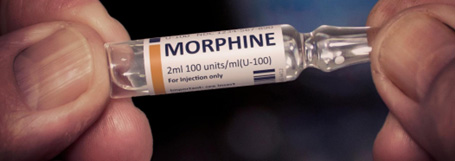
Morphine is a powerful narcotic found naturally in opium, a dark brown substance found in poppies (Papaver somniferum). It works directly on the central nervous system (CNS) to provide analgesia and modify pain perception and emotional reaction. It is commonly used for pain from myocardial infarction, kidney stones, and during delivery. It can be given for both acute and chronic pain. Morphine was discovered by German chemist Friedrich Sertürner between 1803 and 1805. This is often regarded as the first isolated active component from a plant. Merck began commercialising it in 1827. In the 1870s, crude morphine obtained from the plant P. Somniferum was cooked in acetic anhydride to produce diacetylmorphine (heroin), which was discovered to be easily converted to codeine (painkiller).
Morphine became increasingly popular once the hypodermic syringe was invented in 1853-1855. With repeated use, physical and psychological dependency and tolerance may develop. Historically, the Sumerians and Ancient Greeks employed poppy extracts for medical purposes, whereas the Arabs classified opium as addictive.
- Quinine
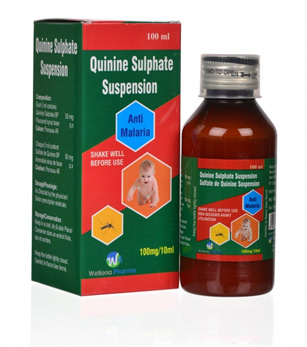
Quinine, an anti-malarial medication derived from the bark of Cinchona Succirubra, has been used for generations to treat malaria, fever, indigestion, mouth and throat illnesses, and cancer. Quinine was isolated in 1820 from the bark of a cinchona tree endemic to Peru, and Strecker discovered its chemical formula in 1854. Cinchona alkaloids refer to the class of chemical substances to which it belongs. Bark extracts had been used to treat malaria since at least 1632, and it was introduced to Spain by Jesuit missionaries returning from the New World as early as 1636.
Quinine is used to flavour tonic water and bitter lemon drink mixers. Tonic water was originally advertised as a way to administer quinine to customers for anti-malarial protection. According to legend, because anti-malarial quinine tonic is bitter, British colonials in India blended it with gin to make it more palatable, giving rise to the gin and tonic drink.
- Penicillin
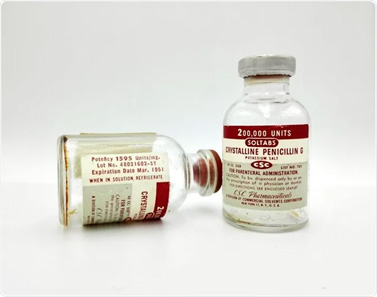
One of the most well-known drugs produced from natural sources is penicillin, which was discovered by Fleming in 1929 from the fungus Penicillium Notatum. In 1930, Fleming’s student Cecil George Paine became the first person to effectively utilise penicillin to cure an eye infection (ophthalmia neonatorum). A research team led by Howard Florey and Ernst Boris Chain at the University of Oxford identified the pure chemical (penicillin F) in 1940. This finding resulted in the re-isolation and clinical investigations of synthetic penicillins by Chain, Florey, and others in the early 1940s, as well as the commercialization of synthetic penicillins. The widespread use of penicillin saved numerous lives, earning Chain and Florey (together with Fleming) the 1945 Nobel Prize in Physiology and Medicine.