Four cutting-edge start-ups using AI for natural medicine, meat-free protein and functional food product development.

A new breed of computer specialists is combining food science and molecular biology with sophisticated artificial intelligence to discover natural ingredients, formulas, and trends that humans could never have imagined. For over five years, the AI trend has been expanding in the food, beverage, and nutraceuticals industries, as companies rush to find the next plant-based proteins, supercultures for fermentation, and bioactives buried in the plant world.
Natural language processing, computer vision, and deep learning are among the big-data technologies being utilised to reverse-engineer substances from the molecule up and at the speed of light. Biotech and computational biology firms are flourishing, and some have even achieved unicorn status as a result of this appetite for rapid innovation.
Listed below are some of the companies that are direct competitors with herbalogi.AI that work with natural products and herbal medicine. Some are active in the vegan food industry. Some are discovering new flavours and creating creative recipes. One thing in common in this list, they are outright inspirational and set a tough benchmark for us.
- NotCo
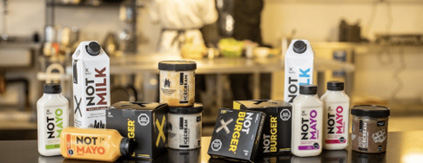
NotCo is an alt-protein firm that achieved the unicorn status thanks to backing from tennis great Roger Federer and agreements with Burger King and Kraft Heinz.
Giuseppe, the NotCo’s AI platform, uses machine learning algorithms to determine the finest plant-based substitutes for animal proteins by taking everything from flavour to viscosity into account. It claims to have come up with several seemingly odd yet incredibly effective notions.
The recipe for NotMilk, which incorporates pineapple and cabbage, has so far been the biggest surprise. Pineapples, it turns out, have molecular similarities to cow milk. Giuseppe develops ideas, recipes, and methods that are then tested in NotCo’s kitchen. Critiques are given back into Giuseppe, allowing the AI to continue to evolve.
- Nuritas
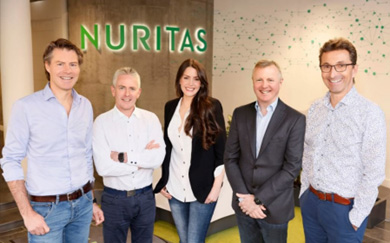
Nuritas is a biotech business established in Dublin, Ireland that combines AI with molecular-level ‘omic analysis to create the world’s biggest peptide knowledge repository.
The Nuritas technology, Nuritas Peptide Finder, analyses billions of peptides found in plants and natural food sources in order to anticipate and discover how they affect certain health regions, biochemical pathways, or receptors. Following its predictions, Nuritas scientists create peptide networks and conduct cell-based experiments.
PeptAIde 4, a peptide identified in rice with possible advantages for hair and skin affected by inflammation; PeptiYouth, discovered in peas and supporting skin health; and PeptiStrong, discovered in fava beans and boosting muscular strength.
- Shiru
Shiru, a firm established in San Francisco, California, has begun on an environmental mission to minimise our dependency on cattle by reinventing meals with unique components derived from plant-based proteins. Finding proteins that taste, cook, look, and chew like meat, dairy, and eggs is a problem.
Shiru hopes its Flourish AI platform can identify the optimal recipe. Flourish connects protein identities to food functionality by querying a vast database of millions of naturally occurring proteins, and then testing any interesting possibilities for compatibility with the required ingredient functionality.
When Flourish discovers a new plant protein, food scientists utilise tiny amounts to genetically design and create huge quantities of the protein using microbial fermentation.
- Brightseed
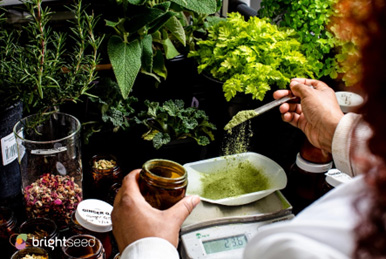
Brightseed is an AI-powered data firm cataloguing millions of hidden substances in plants and uncovering the plant kingdom’s therapeutic and nutritional secrets.
Forager, the name of its AI system, employs machine learning that has been trained in a huge library of biomedical and botanical research. The technology can search for beneficial substances buried in a variety of plant sources. This can be used by supplement manufacturers to choose which plant sources to include in order to provide certain health advantages. Over 1.5 million chemicals have been linked to human health objectives, with an aim of mapping 10 million by 2025. Forager’s first important finding was the identification of N-trans caffeoyltyramine and N-trans-feruloyltyramine in over 80 common edible plant sources. Both have been shown in studies to be effective in the prevention of cardiovascular disease.